
Overview
MEAL is a community-driven platform designed to reduce food insecurity by connecting surplus food, educational resources, and local organizations to the people who need them most. The project focused on communities within the Dallas–Fort Worth Metroplex, where access to fresh, affordable food is limited and was further exacerbated by the COVID-19 pandemic
This initiative explored how design can empower community leaders, support networks, and residents to collaborate more effectively—moving beyond food donation toward sustainable, education-driven solutions.
This initiative explored how design can empower community leaders, support networks, and residents to collaborate more effectively—moving beyond food donation toward sustainable, education-driven solutions.

The Challenge
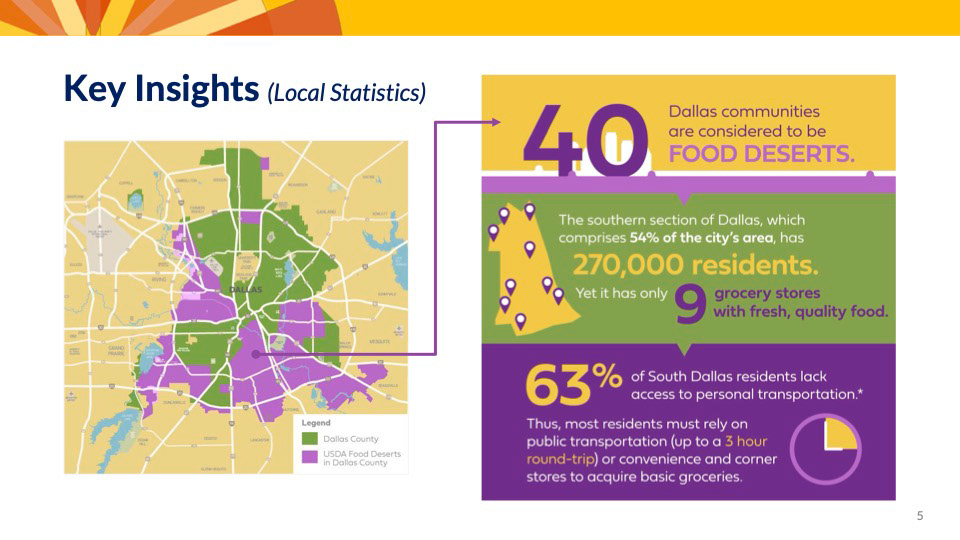
Food insecurity in DFW is not caused by a lack of food, but by distribution gaps, limited transportation, fragmented information, and lack of education around food preparation. Many communities qualify as food deserts, where residents rely on convenience stores or long public-transport trips to access groceries.
The core challenge was to design a system that:
• Improves access to reliable food resources
• Educates communities on how to use fresh food
• Supports long-term sustainability rather than short-term aid
My Role
I worked as a UX Designer and Researcher within a multidisciplinary team. My contributions included:
• Synthesizing expert interviews and research insights
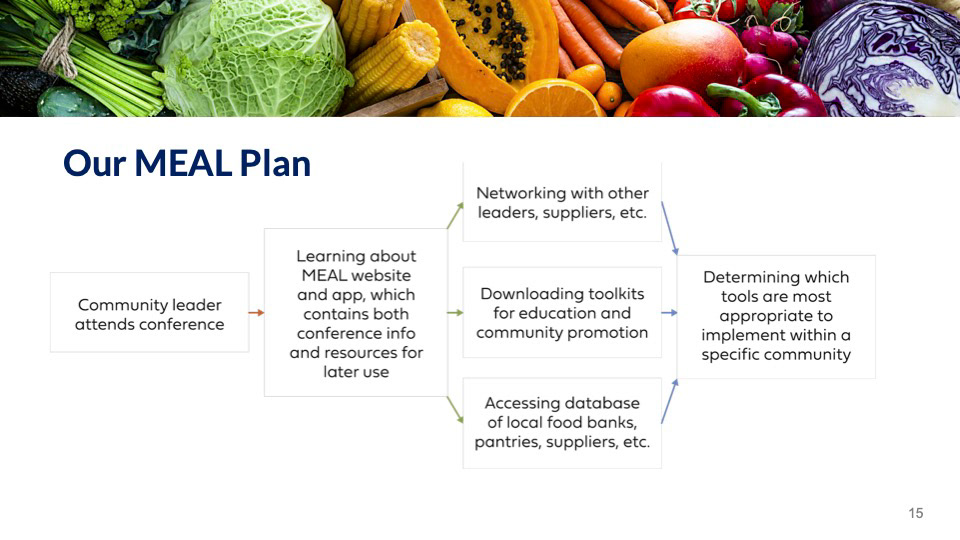
• Defining the experience strategy and user journeys
• Designing mobile and web UX concepts
• Supporting visual system exploration and accessibility considerations
• Collaborating on toolkits and educational materials
Research & Discovery
We conducted extensive qualitative research with subject matter experts including:
• Farmers and urban gardeners
• Food rescue organizations and NGOs
• Faith leaders and community organizers
• Academics and local retailers
Key insights included:
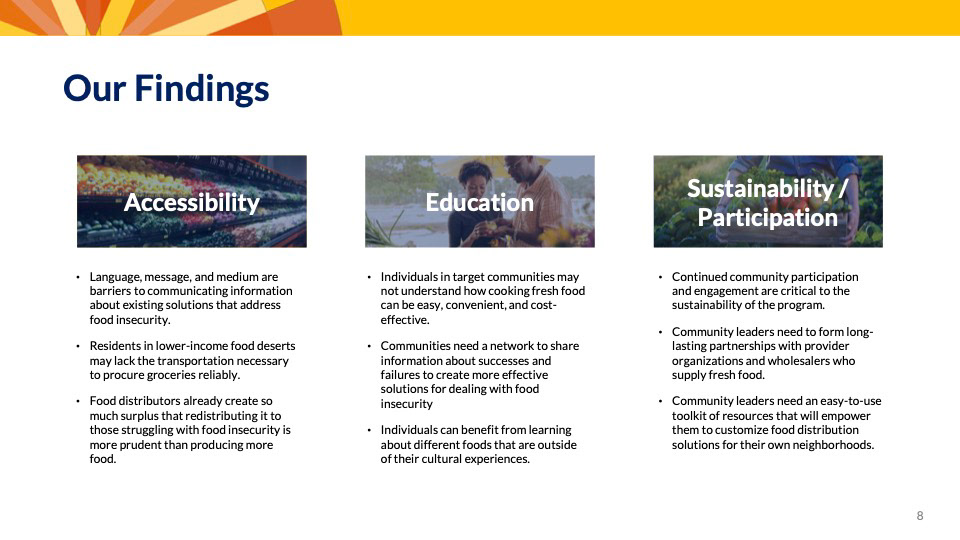
• Food surplus already exists at scale, but redistribution is inefficient
• Community leaders lack centralized digital tools
• Education is critical—many residents don’t know how to cook unfamiliar fresh foods
• Volunteer burnout and fragmented communication threaten sustainability
• Local leaders need adaptable toolkits tailored to their neighborhoods
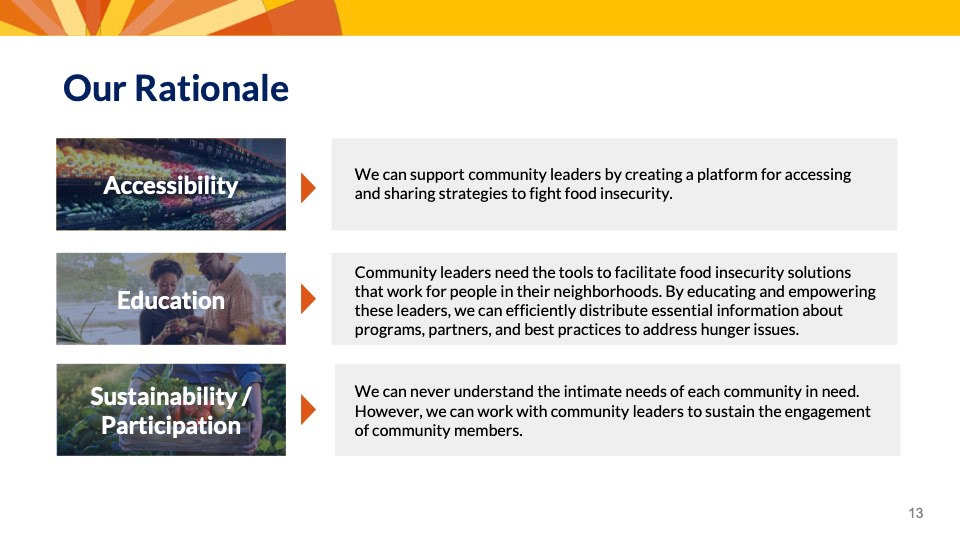
These findings highlighted three pillars: Accessibility, Education, and Sustainability
Design Strategy
We reframed the problem away from “feeding people” and toward empowering local leaders with tools, education, and networks to create long-lasting impact.
Our design strategy focused on:
• Centralizing resources into a single platform
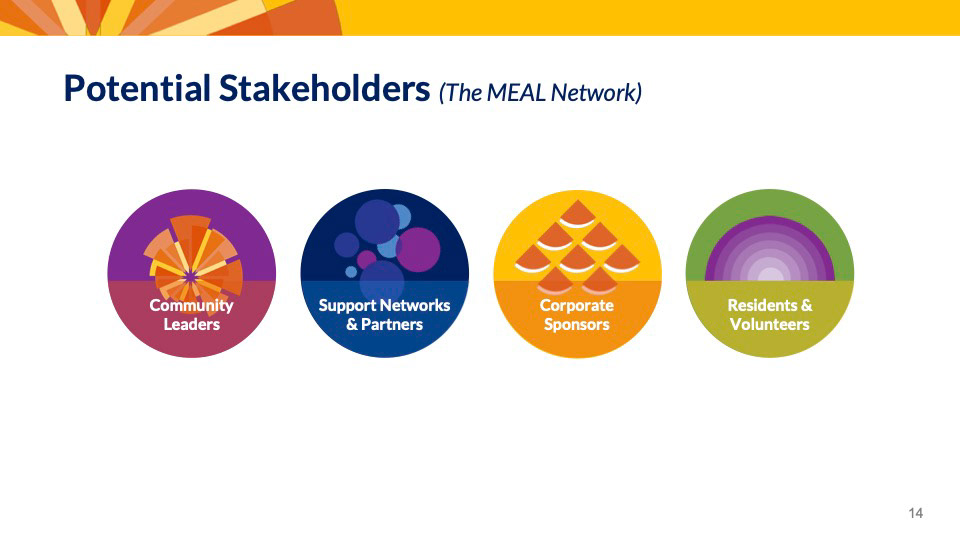
• Supporting multiple stakeholder groups with tailored experiences
• Creating scalable systems that could grow beyond one region
The Solution
MEAL was designed as a multi-touchpoint ecosystem, including:
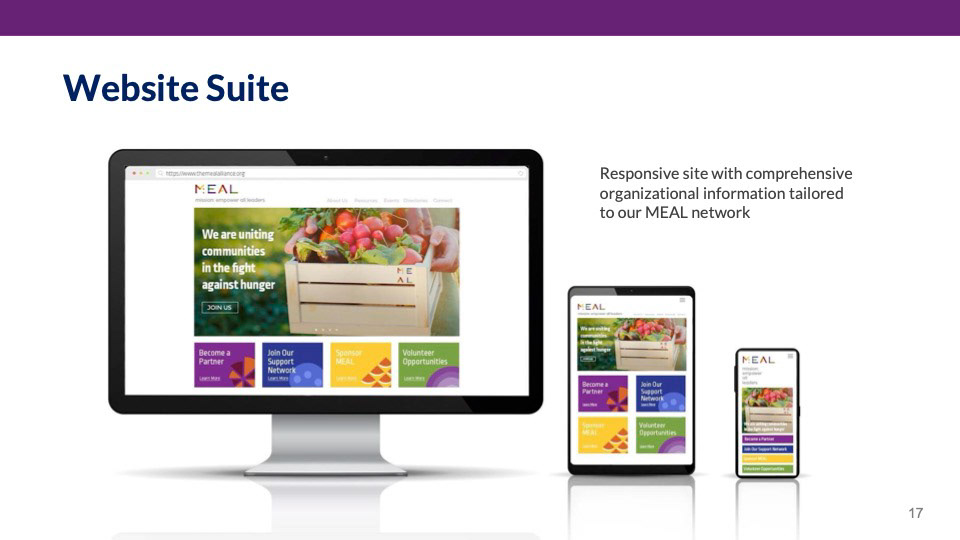
1) Responsive Website
A web platform providing:
• Organizational information
• Resource libraries
• Partner directories
• Educational toolkits
Designed to support community leaders, sponsors, and support organizations.
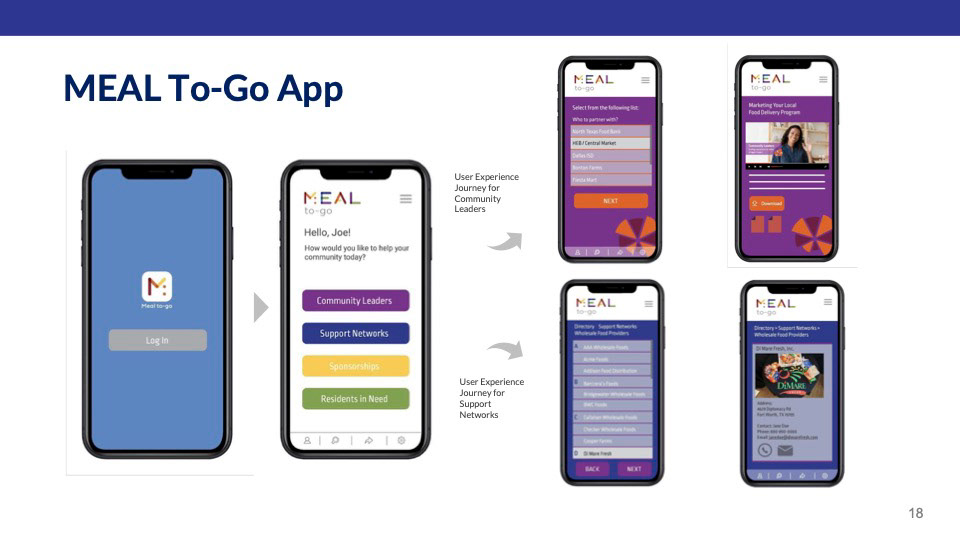
2) MEAL To-Go Mobile App
A mobile experience tailored to different users:
• Community leaders managing initiatives
• Support networks coordinating food distribution
• Residents accessing food and education
The app emphasized clarity, accessibility, and low-friction onboarding.
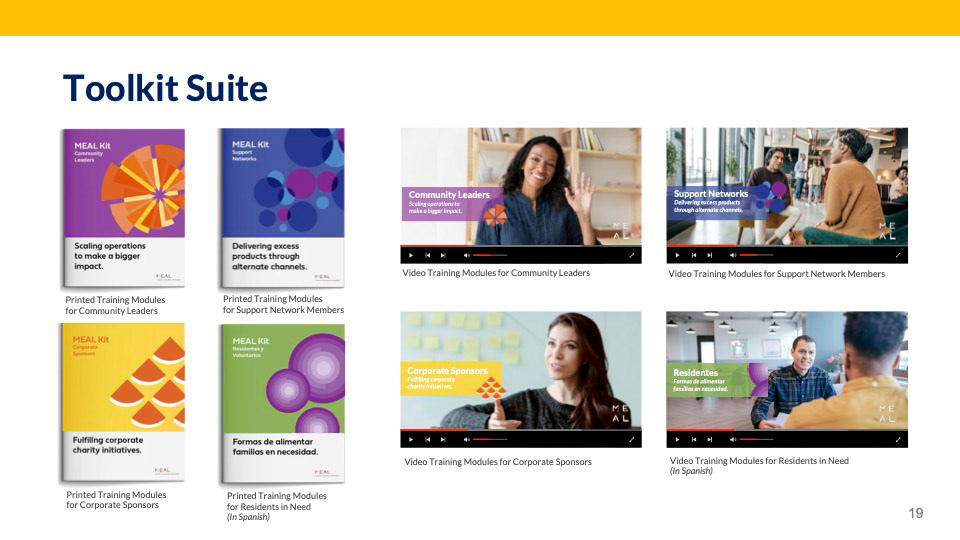
3) Toolkit Suite
Physical and digital toolkits created for:
• Community leaders
• Support organizations
• Corporate sponsors
• Residents in need (including Spanish-language materials)
Toolkits included training guides, videos, and practical frameworks.
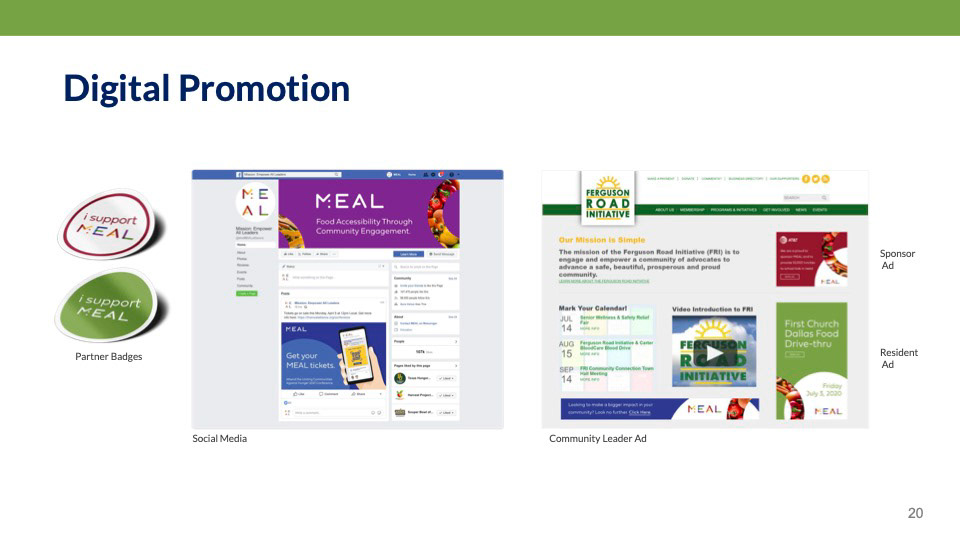
4) Community Engagement
We extended the system beyond digital products through:
• Social media campaigns
• Partner badges and digital promotion
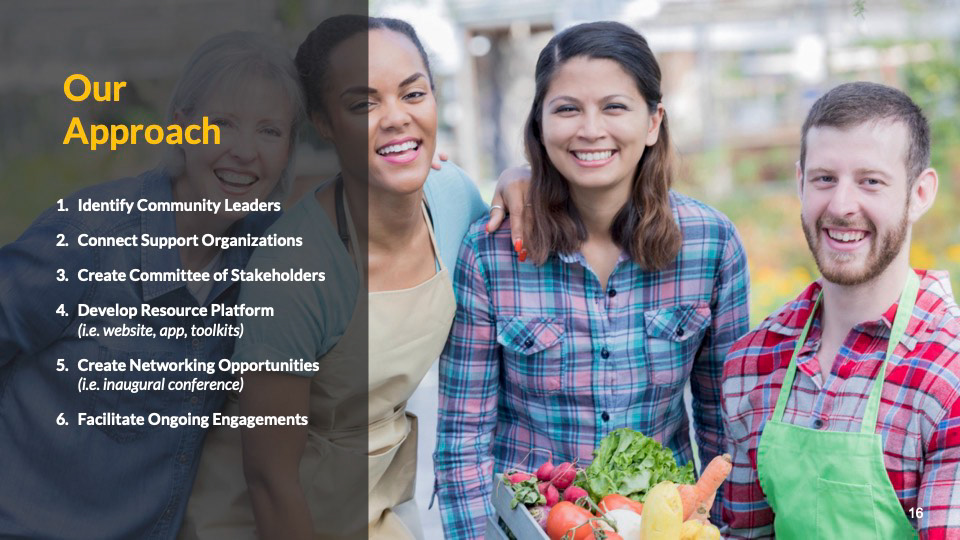
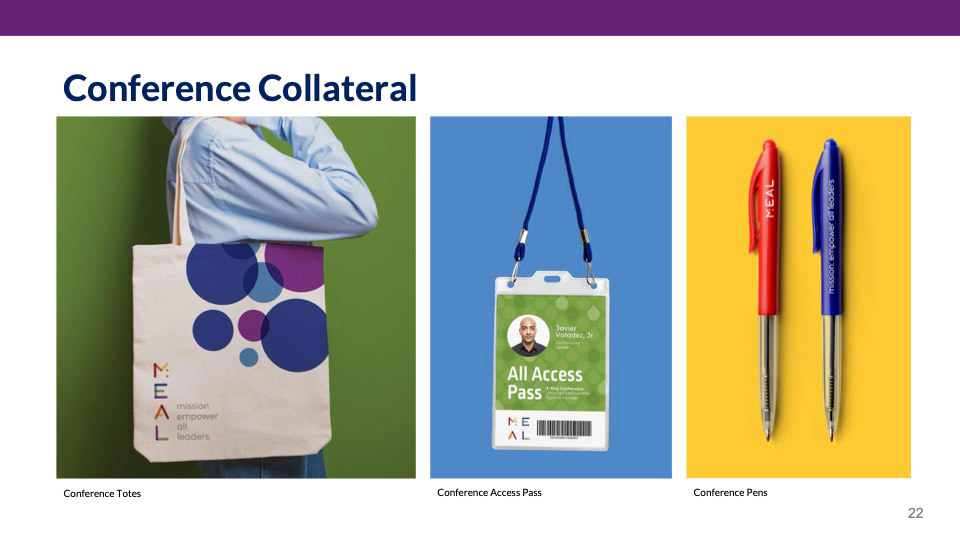
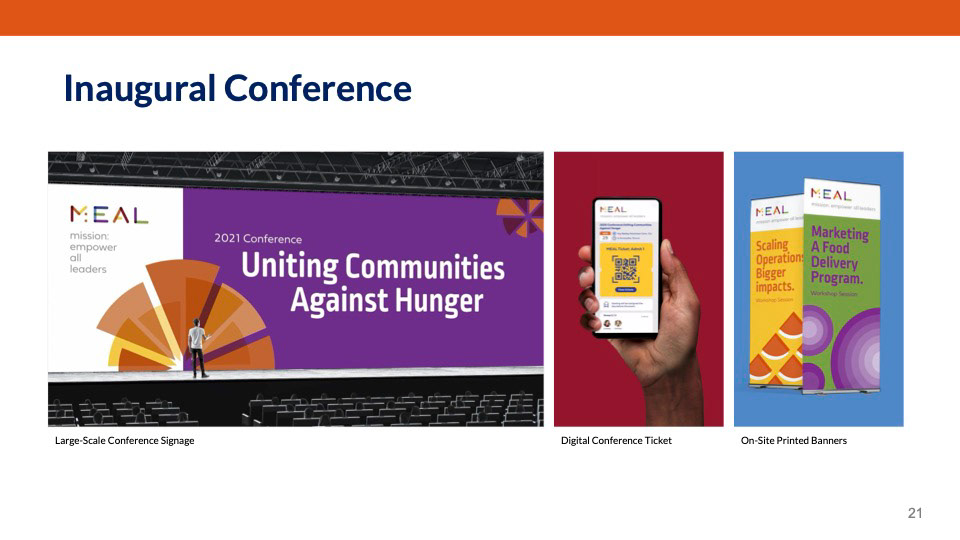
• An inaugural conference to unite stakeholders and build trust
Outcomes & Impact
While this was a conceptual and academic project, MEAL demonstrated how a systems-thinking approach can address complex social problems through design.
Expected outcomes included:
• Improved access to food resources in underserved communities
• Empowered community leaders with scalable tools
• Reduced food waste through better coordination
• A model capable of expanding to other metropolitan areas
Reflection
MEAL reinforced the importance of designing with communities, not for them. The project showed that meaningful social impact requires:
• Deep qualitative research
• Cross-sector collaboration
• Education as a core UX pillar
• Designing ecosystems, not just screens
This experience continues to inform my approach to complex, human-centered product design.